In a dramatic turn of events, a Georgia courtroom was rocked on Wednesday when AI-generated deficiencies in the state’s legal filings threatened to derail the appeal of Hannah Payne, a woman convicted of murder in a citizen’s arrest gone wrong.
The case, which centers on Payne’s conviction for the 2019 death of Kenneth Herring, 62, has now reached the Georgia Supreme Court after Payne’s appeal, citing ineffective assistance of counsel, was rejected by the lower courts.
The Murder and Appeal

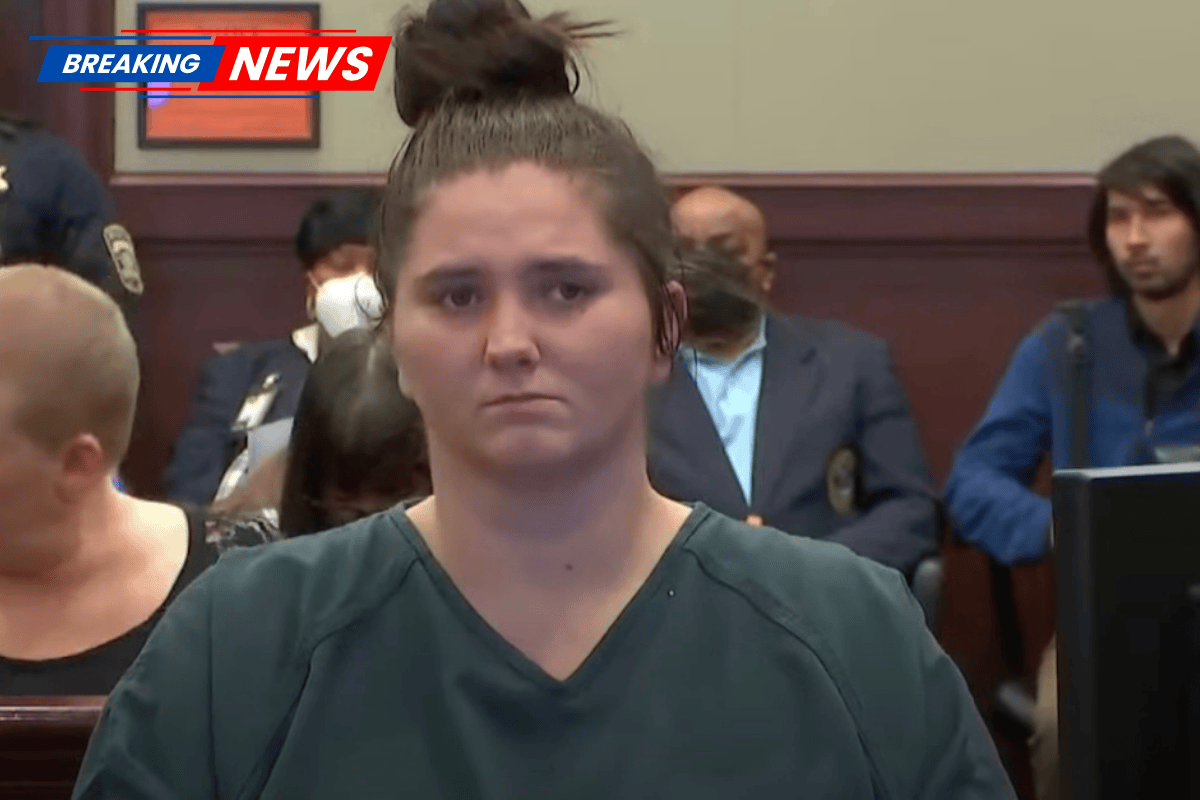
In December 2023, Payne, 25, was convicted on multiple charges, including felony murder, malice murder, aggravated assault, and false imprisonment for the May 2019 death of Kenneth Herring.
Herring’s death occurred after an altercation during a citizen’s arrest attempt by Payne, which went horribly wrong. The defendant was sentenced to life in prison, with the possibility of parole after 43 years.
Payne quickly filed for an appeal, arguing that her conviction was due to ineffective legal counsel. Her appeal process reached the Georgia Supreme Court this week after losing a motion for a new trial in late summer 2025.
The Courtroom Drama

During oral arguments, Chief Justice Nels S.D. Peterson highlighted significant issues with the legal filings from the lower court. Peterson pointed out that the court’s order denying Payne a new trial contained multiple citations to nonexistent legal cases, as well as other citations that didn’t support the arguments they were meant to back.
The justice noted that “at least five citations to cases that don’t exist” and “three quotations that don’t exist” were found.
State attorney Deborah Leslie denied knowledge of the fabricated citations. She acknowledged revising the order but seemed unaware of the apparent errors.

However, the justice quickly pointed out that these incorrect citations had already appeared in the initial brief opposing Payne’s motion for a new trial. Leslie offered to research and provide a supplement to the court.
Legal Filings and Oversight
Court TV and Law&Crime obtained copies of the original and revised legal orders, showing that both documents contained identical numbers of faulty citations.
This revelation led to a further apology from Payne’s appellate lawyer, Andrew Fleischman. He admitted to not catching the errors in the state’s filings and apologized for not reviewing the cited cases in detail.
Despite the chaos caused by the mistaken citations, the crux of the appeal remains focused on Payne’s claim that her trial counsel was constitutionally deficient for not asserting a defense of others or a citizen’s arrest in her self-defense argument.
Payne has argued that she never meant for her gun to discharge during the altercation and that Herring accidentally shot himself during the struggle over her weapon.
The State’s Argument and Court Deliberation
The state argues that Payne’s defense theories, including self-defense and citizen’s arrest, were unsupported by the evidence, thus justifying the trial counsel’s decision not to present them.
While the courtroom drama over the AI-generated legal deficiencies created significant tension, the justices gave no indication that the incident would influence the outcome of Payne’s case.