
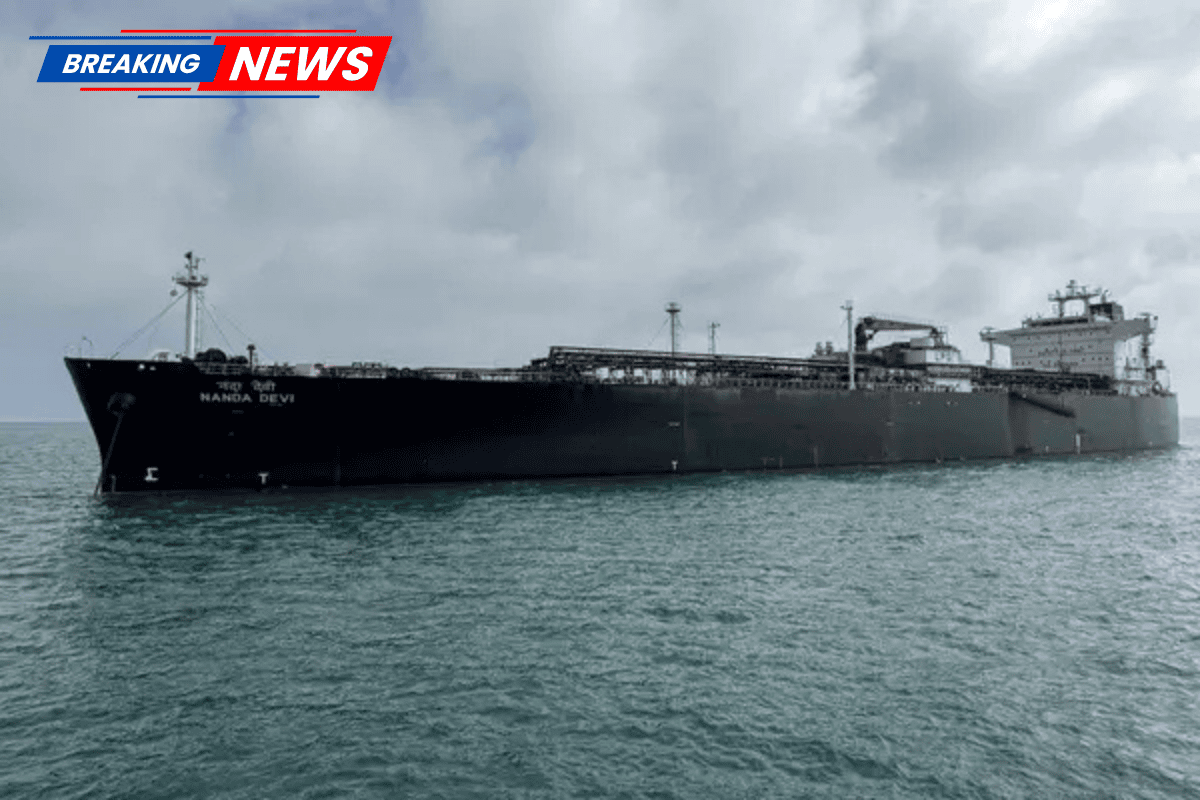
A potentially decisive confrontation is brewing over the Strait of Hormuz, as thousands of U.S. Marines are being deployed to the Middle East. The growing tensions come after U.S. President Donald Trump vowed to destroy Iranian power plants if the strait isn’t reopened by Monday.
Iran has responded with threats to target critical infrastructure in the Gulf, including desalination plants crucial for the region’s fresh water supply.
The Escalating U.S.-Iran Conflict: Options on the Table

Trump’s threat to destroy Iranian infrastructure escalates the conflict, with both sides showing no signs of backing down. The U.S. has already suggested sending warships to escort oil tankers through the strait, but the ships would still be at risk of entering Iran’s so-called “kill box.”
As the situation continues to evolve, President Trump may decide to extend the conflict beyond an aerial campaign to a ground offensive.
The possibility of deploying U.S. troops along the Strait of Hormuz to clear threats to maritime traffic is becoming increasingly likely. These U.S. Marines could also target Kharg Island, a key hub for Iran’s oil exports, to apply pressure on Tehran to reopen the strategic waterway.
Risks of Ground Troops in the Region

Deploying U.S. troops to seize and hold territory in the region is fraught with risks. Iran has already demonstrated its capability to damage U.S. military bases and embassies with swarming projectiles, overwhelming air defenses.
Holding ground in such a volatile region would require extensive resources, and experts warn that it could lead to further escalation.
U.S. Military’s Current Strategy: Aerial Strikes and Naval Operations
For now, the U.S. military continues to target Iran’s naval capabilities in the region. Apache helicopters and A-10 Thunderbolt aircraft have been used to destroy Iran’s fast attack boats, while bombers have taken out anti-ship missile stockpiles.

These operations aim to weaken Iran’s ability to close off the Strait of Hormuz, a critical passage for global oil shipments.
The Potential for a Naval Blockade on Iranian Oil Exports
An alternative strategy being considered is a naval blockade aimed at preventing Iranian oil from reaching its destinations. By disrupting Iran’s oil exports, the U.S. could apply significant economic pressure, similar to the shock caused by the closure of the strait to its oil-producing neighbors.
Robin Brooks, senior fellow at the Brookings Institution, argues that such a blockade could force Iran to reopen the strait more quickly. In a recent post, he suggested that the U.S. could effectively implode Iran’s economy by halting its oil exports, depriving the regime of the hard currency needed to sustain its war efforts.
While Brooks acknowledged that the U.S. Navy may not have enough ships to escort all the tankers transiting the Strait of Hormuz, he pointed out that a blockade would be a more feasible strategy.
This would likely lead to a temporary spike in global oil prices but could ultimately bring the conflict to a swifter resolution.
China’s Role in the Crisis and Potential Influence on Iran
China, a major buyer of Iranian oil, could play a crucial role in de-escalating the situation. As the U.S. moves to block Iranian oil exports, China might exert pressure on Tehran to reopen the strait. Such an embargo would not only deprive Iran of essential revenue but could also help bring an end to the conflict sooner.
Richard Haass Proposes an “Open for All or Closed to All” Policy
Richard Haass, former president of the Council on Foreign Relations, also advocated for a blockade strategy. In a recent analysis, Haass proposed an “Open for All or Closed to All” policy to resolve the Hormuz crisis.
He suggested a 200-mile-wide defensive line across the Gulf of Oman, using a combination of ships, aircraft, and drones to prevent Iranian oil tankers from reaching their destinations.
This policy would deny Iran its most important source of revenue, creating domestic pressures that could force the regime to back down and agree to a ceasefire.
Haass emphasized that the U.S. and its allies would need to enforce a policy that prevents any Iranian oil from reaching foreign markets unless Iran ceases its attacks on commercial vessels transiting the Strait of Hormuz.










‘Disgusting.’ Democratic senator condemns Donald Trump’s reaction to Mueller’s death