
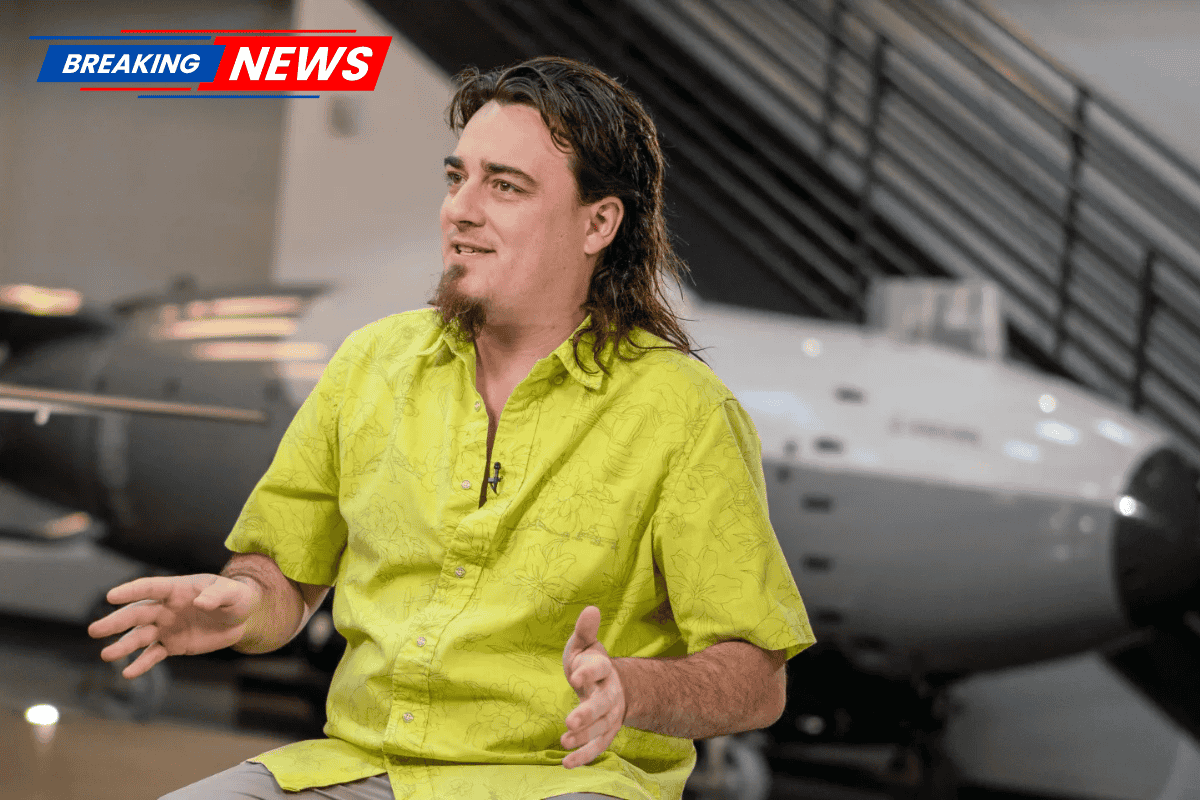
The U.S. Army has announced a historic deal with Anduril Industries, a defense tech startup, marking a significant shift in how the military engages with venture-backed technology companies.
This long-term agreement, valued at up to $20 billion, is a milestone that positions Anduril as a key player in the Pentagon’s future defense efforts.
The Pentagon’s New Strategy: Betting Big on Defense Startups
In a move that signals the growing importance of tech-driven defense companies, the Pentagon is shifting away from traditional defense contractors and placing significant bets on a select few startups.
The latest agreement with Anduril consolidates approximately 120 existing orders into a single contract, which promises to expedite future deals. This five- to ten-year enterprise contract is expected to significantly alter the way defense tech companies work with the U.S. military, moving them from small-scale pilot projects to large-scale, core mission involvement.
Anduril’s new $87 million contract, signed earlier this week, marks the first task order under this larger agreement. The company, founded in 2017 by Palmer Luckey, has quickly become known for its AI-powered drones and advanced security technologies.
A New Era for Venture-Funded Defense Tech

For startups like Anduril, which specializes in anti-drone systems and border security, this new contract establishes a new industry benchmark.
According to Steven Simoni, cofounder of Allen Control Systems, an autonomous weapons startup, this shift represents a larger institutional desire from the Pentagon to back companies that can deliver fully functional systems in the field, not just prototypes or promises.
“Defense acquisition used to reward presentations, prototypes, and promises. Now, there is an institutional shift to back companies that can actually build, deploy, and sustain real systems in the field,” Simoni stated.
Anduril’s Growing Influence in the Defense Sector

While Anduril’s impressive contract represents a major leap for the company, it is still a young player compared to defense giants like Lockheed Martin or Boeing.
However, this large-scale deal reflects the Pentagon’s confidence in Anduril’s ability to deliver repeatable, scalable systems—moving beyond bespoke research and development projects.
The new agreement mirrors a previous deal the Army made with Palantir, a data analytics and AI company, which consolidated 75 contracts into one. Anduril’s contract not only copies that model but extends it, incorporating both hardware and software and tying it to live military missions such as counter-drone operations.
The Risks and Rewards of Fixed-Price Contracts
The deal with Anduril also brings risks, particularly around the use of firm-fixed-price (FFP) contracts, which lock in costs for the military and force the contractor to absorb any unexpected costs.
While this model offers price certainty for the Army, it also places significant pressure on Anduril to deliver its systems on time and within budget.
Historical examples, such as Boeing’s KC-46 tanker program and Lockheed Martin’s Littoral Combat Ships, show how fixed-price contracts can go awry if technical issues arise. Anduril’s ability to meet the contract’s demands will be closely watched, as any failure could result in significant financial repercussions for the company.
A New Chapter for Defense Tech Startups
Matthew Steckman, president of Anduril, emphasized that the company is prepared to take on the risks associated with fixed-price contracts. “That’s the goal, to take the risk out of the government’s hands and into industry, incentivizing defense companies to deliver capabilities on time for that price,” Steckman stated.
For Anduril and other startups, this massive deal represents both an opportunity and a challenge. If the company can deliver, it will solidify its place as a core partner for the U.S. military in the years to come. However, any missteps could have significant financial consequences.










‘Disgusting.’ Democratic senator condemns Donald Trump’s reaction to Mueller’s death