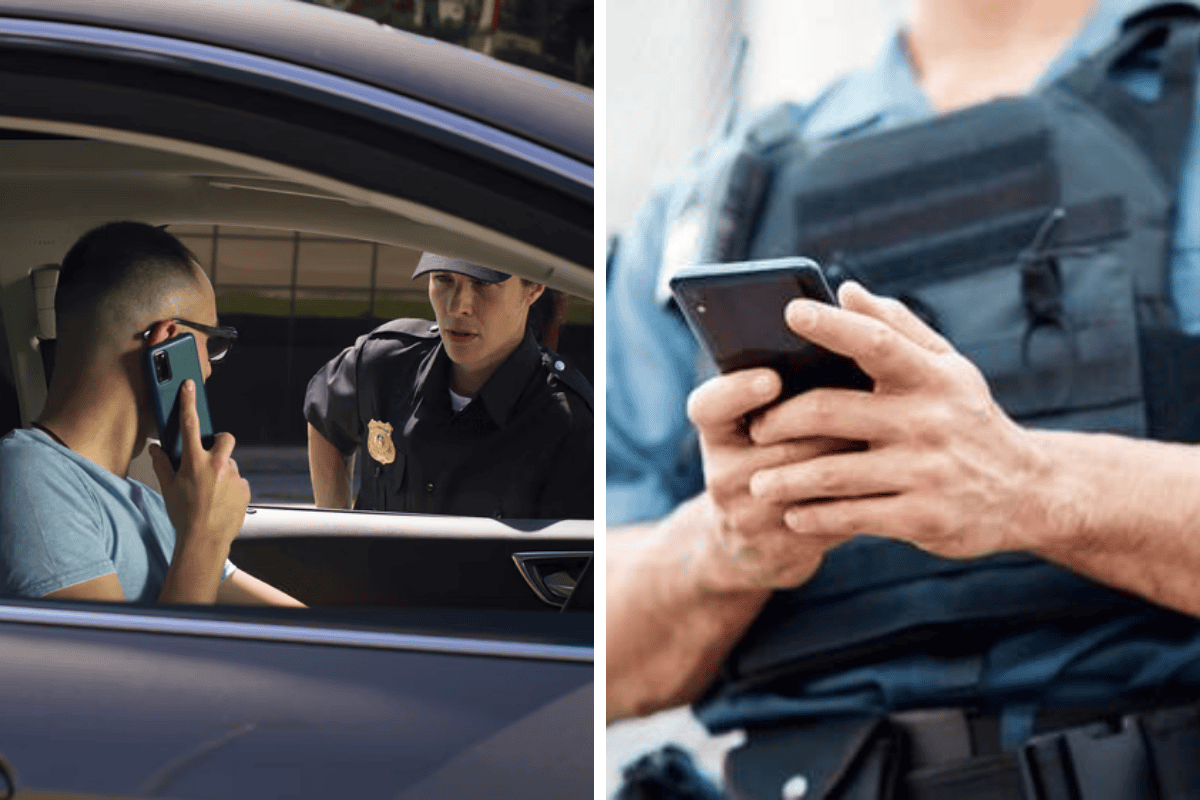
No, Rhode Island police cannot search your phone during a routine traffic stop without a warrant, consent, or probable cause. The Fourth Amendment and Riley v. California (2014) require warrants for phone searches due to their vast personal data, while §31-21.2-5 limits stops to traffic violations without consent searches absent suspicion of crime.
Legal Requirements
Officers need probable cause (e.g., visible evidence linking phone to crime like texting while driving) or a warrant for access; traffic tickets alone don’t suffice.

Consent must be voluntary—politely decline: “I do not consent to searches.” Post-arrest searches may apply under exceptions, but warrants typically needed.
Traffic Stop Rights
Provide license, registration, insurance, and basic info per §1902—no duty to unlock devices or exit unless lawfully ordered. Vehicle searches limited similarly; record interactions legally in public.
Exceptions
- Incident to arrest: Limited by Riley.
- Plain view: Incriminating screen info usable.
- Exigent circumstances: Imminent destruction/public safety (rare).
Remedies
Illegal searches exclude evidence via suppression motions; complain to Internal Affairs or ACLU if coerced.
Practical Steps

Stay calm, assert rights verbally, ask “Am I free to go?” Document details for challenges.
SOURCES:
- https://www.riaclu.org/news/aclu-applauds-court-decision-restricting-police-searches-cell-phones/
- https://collincountymagazine.com/2025/07/06/can-rhode-island-police-search-my-phone-during-a-traffic-stop-heres-what-the-law-says/