
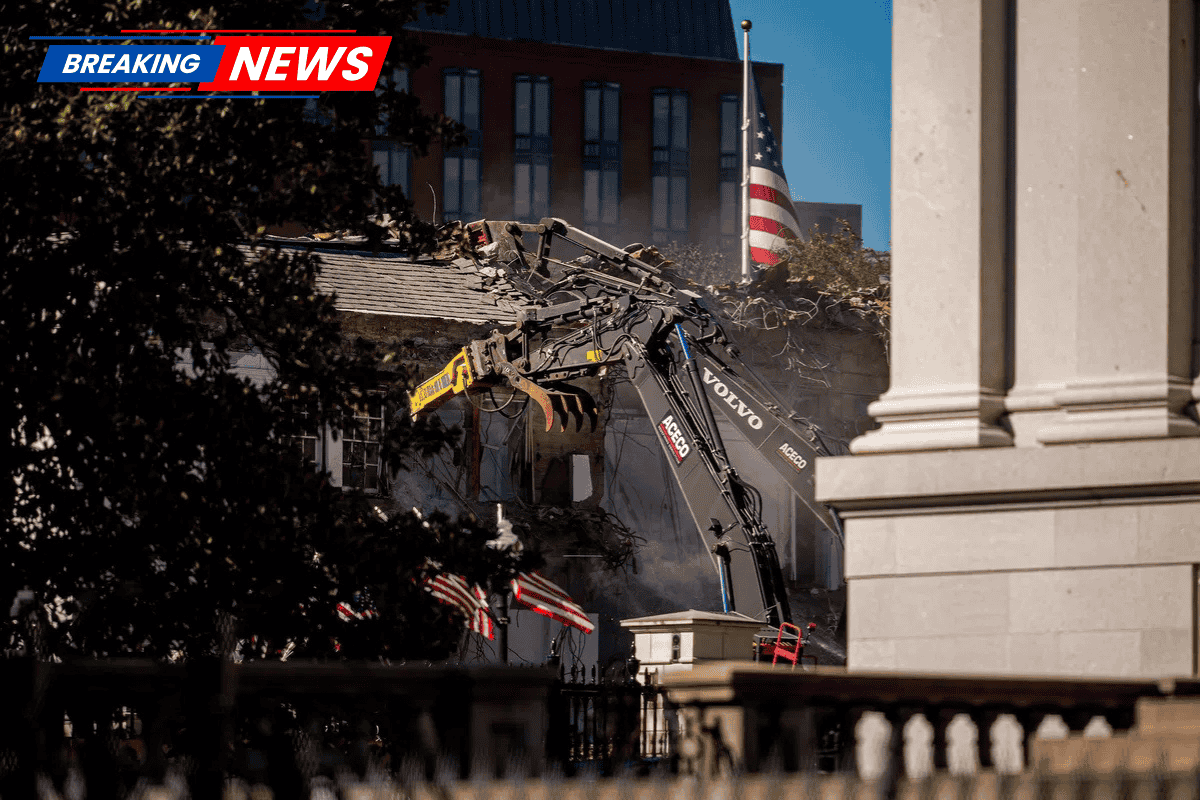
The legal fight over a massive White House ballroom project has taken a serious turn, with a federal judge strongly questioning whether the Trump administration followed the law.
The case is now becoming a key moment in the debate over presidential powers and government oversight in the United States.
What the Case Is About

The dispute centres on a proposed $400 million ballroom project at the White House. The plan reportedly includes:
- A large new ballroom space
- Demolition of parts of the East Wing
- Expansion beyond the size of the main Executive Mansion
Donald Trump has argued that he has the authority to move ahead with the construction without needing approval from Congress.
However, a legal challenge has been filed by the National Trust for Historic Preservation, which says the project should not proceed without proper legal clearance.
Judge Raises Serious Doubts

The case is being heard by Richard Leon, who appeared highly critical of the government’s arguments during a recent hearing.
Judge Leon questioned whether such a large construction project could be considered a simple “alteration” under existing laws. He made it clear that calling such a major redevelopment a minor change stretches the meaning of the law.
He also pushed back against claims that the White House could be treated like a regular national park project. His point was simple: the White House is a unique and symbolic building, not just any public property.
Confusion Over Who Is in Charge

One major issue in the case is who exactly is managing the project.
The Trump administration has made different claims, including:
- The White House itself is directing the project
- The National Park Service is involved in funding and approvals
This has led to confusion, and the judge criticised the government for giving inconsistent explanations. He even pointed out that they “can’t have it both ways” when it comes to responsibility and legal accountability.
Why Congressional Approval Matters
In the United States, major changes to government buildings—especially something as important as the White House—usually require approval from Congress.
Judge Leon suggested that:
- It would have been much simpler to get approval from lawmakers
- Skipping this step raises serious legal concerns
- The administration may be trying to avoid proper checks and balances
This is important because it touches on a basic principle of democracy: no single branch of government should have unlimited power.
What Could Happen Next
The judge is expected to give his decision by the end of March. His ruling could:
- Allow construction to continue
- Or temporarily block the project until Congress approves it
The administration has indicated that construction could begin as early as April, but that now depends on the court’s decision.
No matter what happens, an appeal from the losing side is very likely.
Why This Case Is Important
This case is not just about a building project—it is about how far a president’s power goes.
It raises key questions like:
- Can a president make major changes to national landmarks without approval?
- How should laws about “alteration” be interpreted?
- Who ensures accountability in such decisions?
The outcome could set an important legal example for future administrations.










‘Disgusting.’ Democratic senator condemns Donald Trump’s reaction to Mueller’s death