
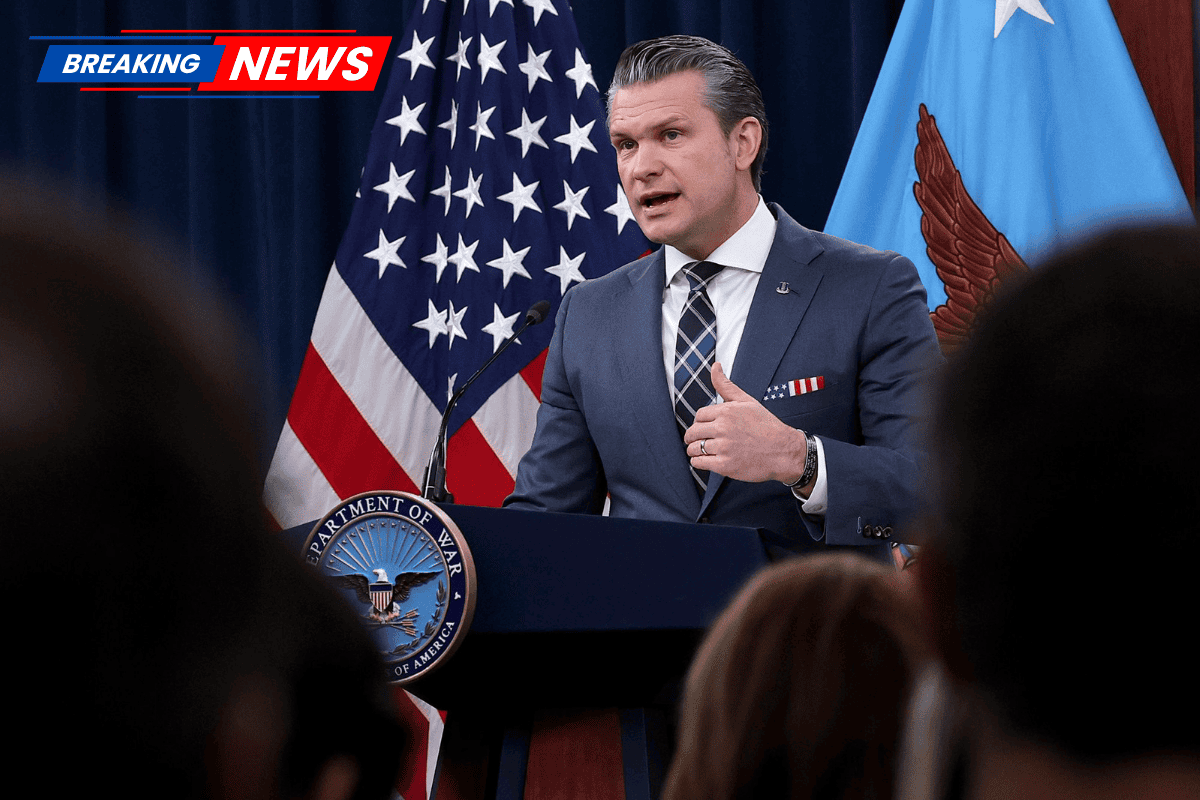
In a significant ruling, a federal judge on Friday invalidated several provisions of a restrictive press policy implemented by Defense Secretary Pete Hegseth, finding that it violated the constitutional rights of journalists covering the U.S. military.
The ruling comes amid heightened media scrutiny of the Defense Department due to ongoing conflicts, such as the war in Iran and military operations in Venezuela.
The Ruling and Its Impact

Senior U.S. District Judge Paul Friedman ruled that certain elements of the Pentagon’s policy, which allowed the suspension or revocation of press credentials based on reporters’ coverage, were unconstitutional.
The decision was a major setback for the Pentagon’s attempt to exert greater control over media access, especially for reporters from prominent outlets like The New York Times and CNN. Judge Friedman emphasized that the policy infringed upon First Amendment protections and threatened the public’s right to access critical information.
“A primary purpose of the First Amendment is to enable the press to publish what it will and the public to read what it chooses, free of any official proscription,” Judge Friedman wrote in his opinion, reinforcing the idea that national security requires a free press.
He pointed out that such suppression of political speech could endanger the nation’s security, citing the longstanding principle that has guided U.S. democracy for nearly 250 years.
Background on the Legal Challenge
The New York Times filed a legal challenge against the policy late last year, arguing that it violated both First Amendment and due process rights. The controversial policy required journalists to sign a pledge not to use or obtain unauthorized materials.
Many news organizations, including The Times and CNN, refused to sign, resulting in several reporters losing their access to Pentagon press credentials.

Judge Friedman ordered the reinstatement of the press credentials for seven national security reporters from The New York Times who had been denied access to the Pentagon under the policy.
National Security vs. Press Freedom
While the judge recognized the importance of protecting national security and military operations, he emphasized that it is equally vital for the public to have access to information, particularly during times of war.
With ongoing conflicts in Venezuela and Iran, the public needs to be well-informed to make decisions about supporting or protesting government actions and to vote based on complete, accurate information.
“The Court recognizes that national security must be protected, the security of our troops must be protected, and war plans must be protected,” Friedman wrote.
“But especially in light of the country’s recent incursion into Venezuela and its ongoing war with Iran, it is more important than ever that the public have access to information from a variety of perspectives.”
Pentagon’s Response and Legal Appeal
The Pentagon disagreed with the court’s decision and announced plans to pursue an immediate appeal. Pentagon spokesman Sean Parnell said in a post on X (formerly Twitter), “We disagree with the decision and are pursuing an immediate appeal.”
First Amendment attorney Theodore Boutrous, representing The New York Times, celebrated the decision as a victory for press freedom. “The district court’s decision is a powerful rejection of the Pentagon’s effort to impede freedom of the press and the reporting of vital information to the American people during a time of war,” Boutrous said.
A Broader Pattern of First Amendment Issues
The ruling also comes on the heels of another legal setback for Hegseth’s department. Just last month, another judge concluded that the Defense Secretary had violated the free speech rights of a Democratic senator by attempting to retaliate against him for urging U.S. service members to disobey illegal orders.
Judge Friedman cited statements from Hegseth and his aides, which suggested the department had been “openly hostile” to certain media outlets and had favored news organizations that expressed support for the Trump administration.
The judge labeled this as “viewpoint discrimination,” asserting that the policy was designed to exclude journalists who did not align with the department’s preferred narrative.
Legal Concerns Over Due Process
Friedman also found that the Pentagon’s policy violated due process rights because it was vague and could result in reporters unintentionally violating its terms.
The policy could have had a chilling effect on basic journalistic practices, such as asking questions of department employees, which might have been deemed a security risk under the policy.
Reaction from Press Freedom Advocates
Press freedom advocates applauded the ruling. Seth Stern, Chief of Advocacy at the Freedom of the Press Foundation, called the Pentagon’s policy “ridiculous” and emphasized the need for journalists to continue holding the Pentagon accountable, especially given the ongoing wars and shifting justifications for military action.
Stern stated, “Journalists should double down on their commitment to finding out what the Pentagon does not want the public to know rather than parroting ‘authorized’ narratives.”





‘Disgusting.’ Democratic senator condemns Donald Trump’s reaction to Mueller’s death