
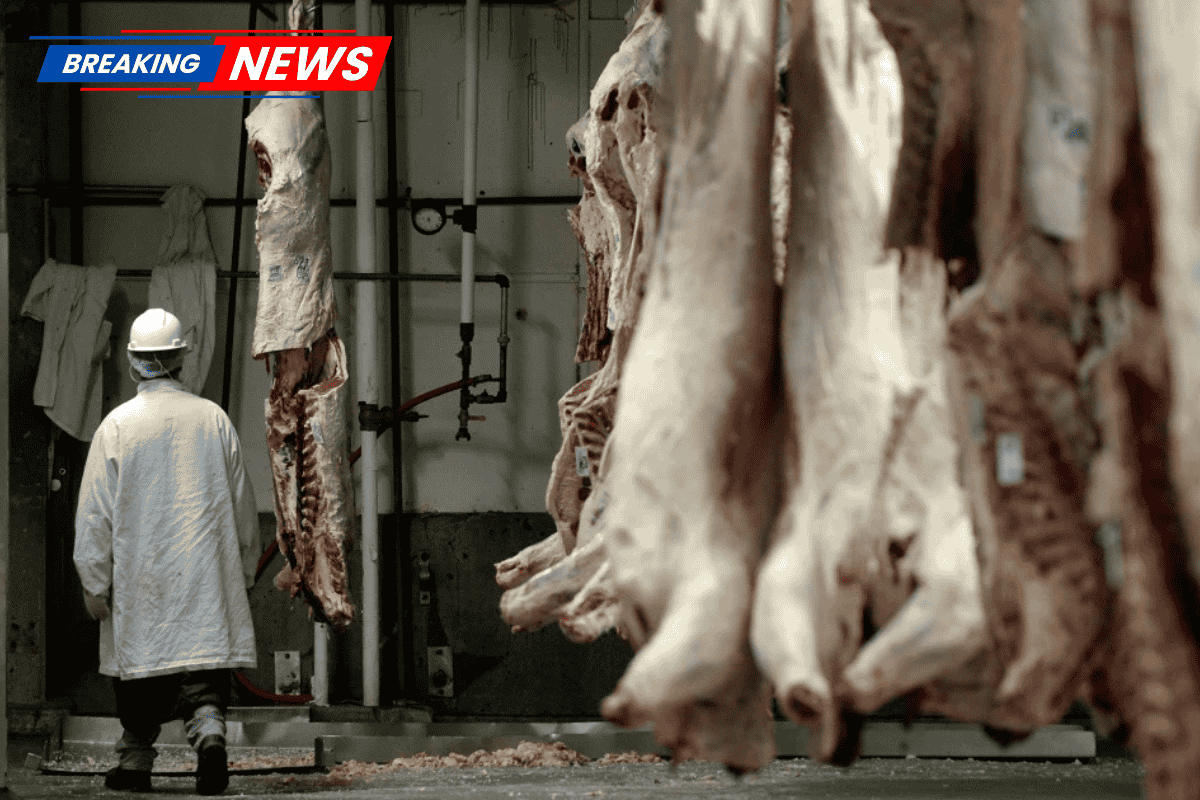
Around 3,800 workers at the Swift Beef Co. plant in Greeley, Colorado were set to strike on Monday morning, marking the first walkout at a U.S. beef slaughterhouse since the 1980s.
The workers, represented by the United Food and Commercial Workers (UFCW) Local 7, planned to begin their strike at 5:30 a.m. MDT in protest of alleged unfair labor practices during contract negotiations.
Labor Dispute and Retaliation Allegations

The strike is a direct response to allegations that JBS USA, the owner of Swift Beef Co., retaliated against workers and engaged in other unfair labor practices.
Union officials claim that the company intimidated workers into quitting the union through one-on-one meetings. Additionally, contract negotiations reached an impasse after the previous agreement expired at midnight Sunday.
Kim Cordova, president of UFCW Local 7, stated that 99% of the workers voted to authorize the strike. The workers’ demands include better wages, improved working conditions, and more favorable contract terms.

However, despite the urgency, no formal negotiations occurred over the weekend after JBS USA refused to meet with union representatives on Saturday.
The Economic Context and Impact
The strike occurs at a time when U.S. beef prices are on the rise, adding to economic anxiety across the country. The U.S. cattle population is at a 75-year low, with the January 1 inventory at just 86.2 million animals, marking a 1% decline from the previous year.
Beef prices have spiked, causing additional strain for consumers, while the Trump administration has been negotiating with Argentina to help reduce food costs, including beef.

The labor dispute also follows the January closure of a meatpacking plant in Lexington, Nebraska, which had a significant impact on the local economy.
JBS USA’s Response
In response to the strike, JBS USA issued a statement saying that employees who chose not to participate in the strike would still be able to work and be paid.
The company outlined plans to maintain operations by temporarily shifting production to other JBS facilities while operating two shifts at the Greeley plant.
The company emphasized its compliance with federal and state labor laws, stating, “Our goal is to minimize impact to our customers, our partners, and the broader marketplace while we work toward a fair resolution in Greeley.”
A Long-Awaited Walkout
This strike would be the first of its kind at a U.S. slaughterhouse since 1985, when workers at a Hormel plant in Minnesota walked out. The 1985 strike lasted over a year and was marked by violent confrontations between protesters and police, as reported by the Minnesota Historical Society.
With both labor unrest and economic factors shaping the outcome, the strike at the Swift Beef Co. plant could have far-reaching implications for the meatpacking industry and the local economy in Colorado.
As the labor dispute continues to unfold, both sides are poised for a battle that could reshape the landscape of U.S. labor relations within the meatpacking sector.






‘Disgusting.’ Democratic senator condemns Donald Trump’s reaction to Mueller’s death