
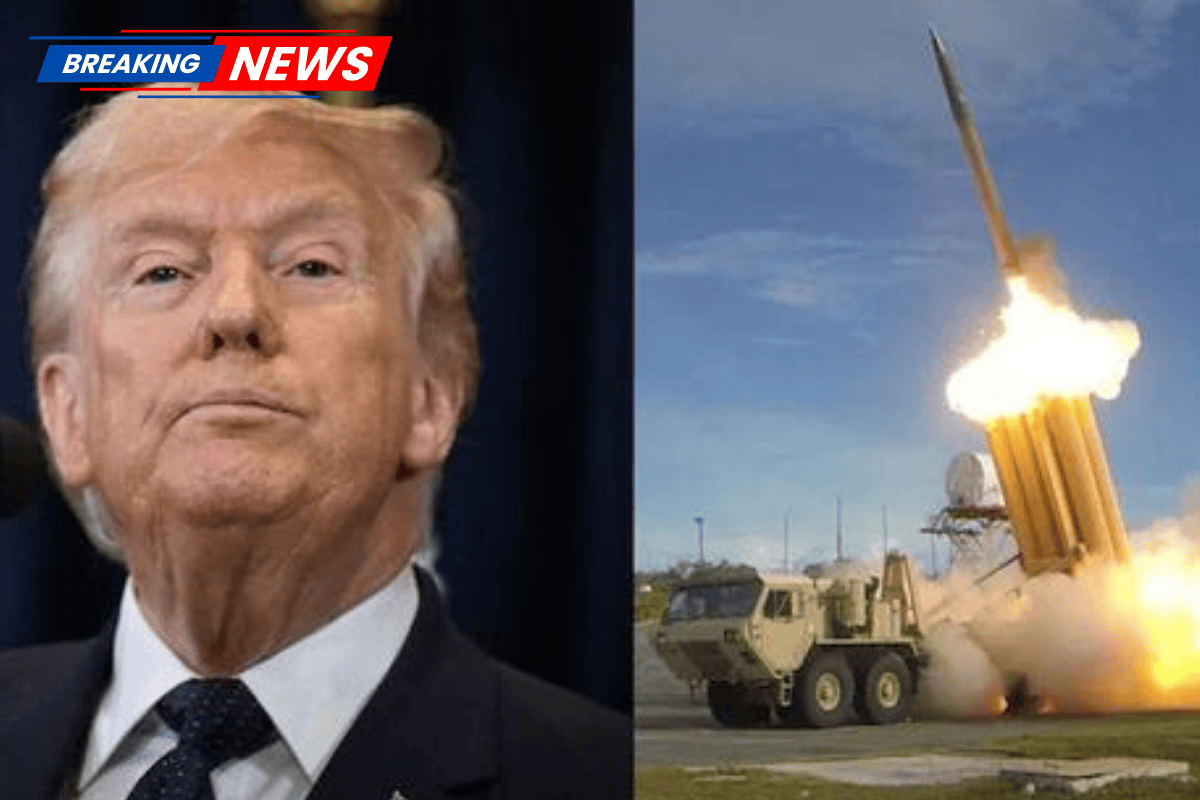
The conflict between the United States and Iran sharply escalated on Tuesday, with U.S. forces deploying 5,000-pound “bunker buster” bombs against Iranian missile sites.
The strikes came just hours after Tehran-affiliated media claimed that hundreds of American soldiers have been killed since the war began on February 28.
Operation Epic Fury: A Strategic Escalation
As “Operation Epic Fury” enters its third week, the information war surrounding the conflict has intensified. While the Trump administration maintains that U.S. casualties remain in the single digits, Iranian state-run Press TV reported that at least 200 U.S. service members were killed, and over 3,000 wounded during the first seven days of the offensive.
Precision Strikes near the Strait of Hormuz
U.S. Central Command (CENTCOM) confirmed the use of multiple GBU-72 Advanced 5K Penetrators—sophisticated 5,000-pound munitions—against hardened Iranian anti-ship missile sites along the coastline.
The strikes targeted the Islamic Revolutionary Guard Corps’ (IRGC) ability to maintain its blockade of the Strait of Hormuz, a vital maritime artery. This strategic region has seen global oil flow throttled by mines and drone swarms launched by Iran.

President Donald Trump claimed, “We have essentially defeated Iran’s air defense,” suggesting that the Islamic Republic’s military would require a decade to rebuild. “They have no air defense whatsoever,” he added during a recent briefing.
Conflicting Casualty Reports
The gulf between Washington and Tehran’s casualty data remains vast:
- Iranian Claim: An intelligence official cited by Press TV alleged the U.S. has lost 150 missile platforms, 23 Patriot systems, and 37 aircraft. The official further claimed that 43% of Washington’s total arms stock has been “wiped out.”
- U.S. Reality: Pentagon officials confirmed seven U.S. deaths to date, primarily resulting from a retaliatory drone strike on a base in Kuwait. However, Defense Secretary Pete Hegseth warned that “there will be more casualties” as the operation continues.
Nuclear Perimeter Breach
The risk of a catastrophic regional escalation spiked when a projectile struck the inner perimeter of the Bushehr nuclear power plant on Tuesday. The International Atomic Energy Agency (IAEA) and Iranian officials confirmed that no radiation leaks or structural damage to the reactor occurred.

However, the strike landed just meters from the operating unit. Russia, which built the facility, condemned the strike, labeling it an irresponsible act that created “unacceptable radiological risks.”
Reported Military Losses (First 18 Days)
- The conflict has led to significant military losses on both sides, although exact numbers remain disputed.
Regional Retaliation
Despite the loss of its Supreme Leader and several top security officials, including Ali Larijani, whose funeral was held Wednesday, Tehran remains defiant.
Recently, Iran reportedly launched Khorramshahr-4 and Qadr missiles equipped with cluster warheads targeting Israeli territory, signaling that its “horizontal escalation” strategy remains in play.
The Economic Impact
With oil prices hovering above $100 per barrel and the Strait of Hormuz still contested, the conflict continues to generate major economic and geopolitical uncertainty, with no signs of diplomatic resolution.









‘Disgusting.’ Democratic senator condemns Donald Trump’s reaction to Mueller’s death