
Iran’s newly appointed supreme leader, Mojtaba Khamenei, son of the late Ayatollah Ali Khamenei, is being described by Israeli national security sources as an “empty entity,” suggesting that he holds little power within the regime.
The assessment comes amidst growing instability and reports of a malfunctioning Iranian leadership.
The New Leader: A Figurehead with Little Control

Mojtaba Khamenei’s leadership has been marred by confusion and dysfunction. According to Kobi Michael, a defense analyst at the Institute for National Security Studies, Mojtaba Khamenei’s leadership has failed to assert control over the regime, which is reportedly on the brink of collapse.
- Mojtaba Khamenei has made no public appearances since his appointment as supreme leader following the death of his father.
- Reports indicate that he does not effectively lead the Iranian regime or its operations.
- Analysts describe the regime as “broken” and in “misfunctioning” mode, largely due to the leadership vacuum created by Mojtaba’s apparent inability to take charge.
The Near-Death Experience of Mojtaba Khamenei
Mojtaba Khamenei narrowly escaped death on February 28, 2026, when his father, Ayatollah Ali Khamenei, was killed in a targeted Israeli strike.
The attack killed several members of the Khamenei family, but Mojtaba reportedly left the compound minutes before the missile strike. According to leaked audio obtained by The Telegraph, Mojtaba sustained only a minor injury to his leg.

Since the attack, questions about Mojtaba’s health have circulated. Some reports claimed that he was in critical condition or even in a coma, though Iranian officials have denied such claims and asserted that he is in good health. Nevertheless, the lack of any public appearances has fueled speculation about his leadership.
Retaliation and Continued Strikes
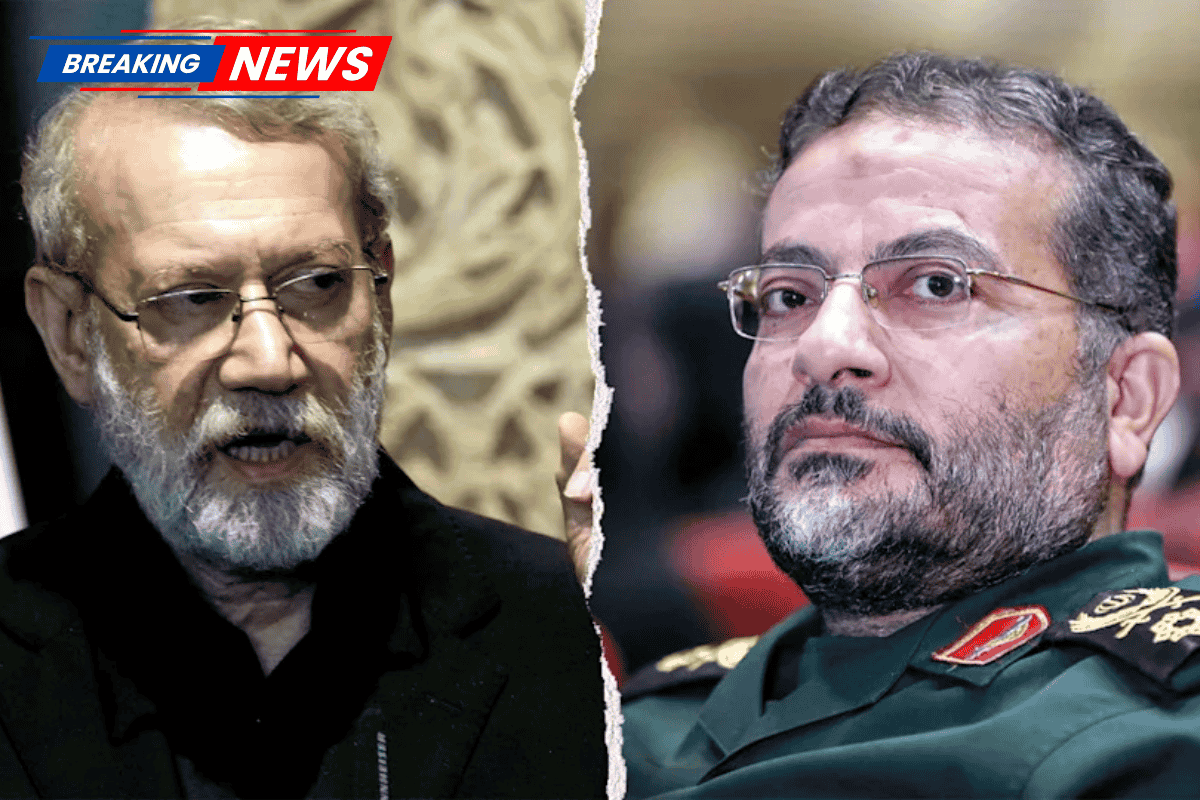
Following the death of Ali Larijani, a senior Iranian security official in another Israeli strike, Mojtaba vowed revenge, promising that such “acts of terror” would only strengthen Iran’s resolve. His statement, delivered through Iranian state TV, echoed the regime’s ongoing rhetoric of retaliation.
- Larijani’s death was the result of Israeli intelligence tracking senior Iranian figures, and other top officials, including Basij militia leader Gholamreza Soleimani, were also reportedly killed in subsequent strikes.
Israel’s ongoing strategy of targeting high-ranking Iranian officials is seen as part of a broader effort to weaken the regime and prevent it from becoming a destabilizing force in the Middle East again.
The Larger Strategy: Weakening the Iranian Regime
Experts such as Michael argue that these strikes are part of a long-term strategy to weaken Iran’s leadership and paralyze the regime’s capacity for control. The continued attacks aim to ensure that the Iranian regime cannot reconstitute itself and return to a position of power.
- This strategic weakening is seen as crucial to prevent Iran from destabilizing the region and from threatening its neighbors, including Israel and the broader Middle East.
The U.S. and Israeli intelligence have aligned in their efforts to degrade the Iranian regime’s internal and external capabilities, believing that a weakened regime creates the conditions for an eventual uprising.
U.S. Support for Iranian Opposition
President Donald Trump had previously called for the Iranian people to take action against their regime, stating that their “moment of freedom” was approaching as the regime weakened.
According to experts, the U.S. and Israel’s efforts are designed to create the conditions for the Iranian people to topple the regime.
- Kobi Michael believes that the ultimate goal of these efforts is to create enough pressure on the Iranian regime, leading to its eventual collapse and a transition toward a more stable and democratic system.






‘Disgusting.’ Democratic senator condemns Donald Trump’s reaction to Mueller’s death