
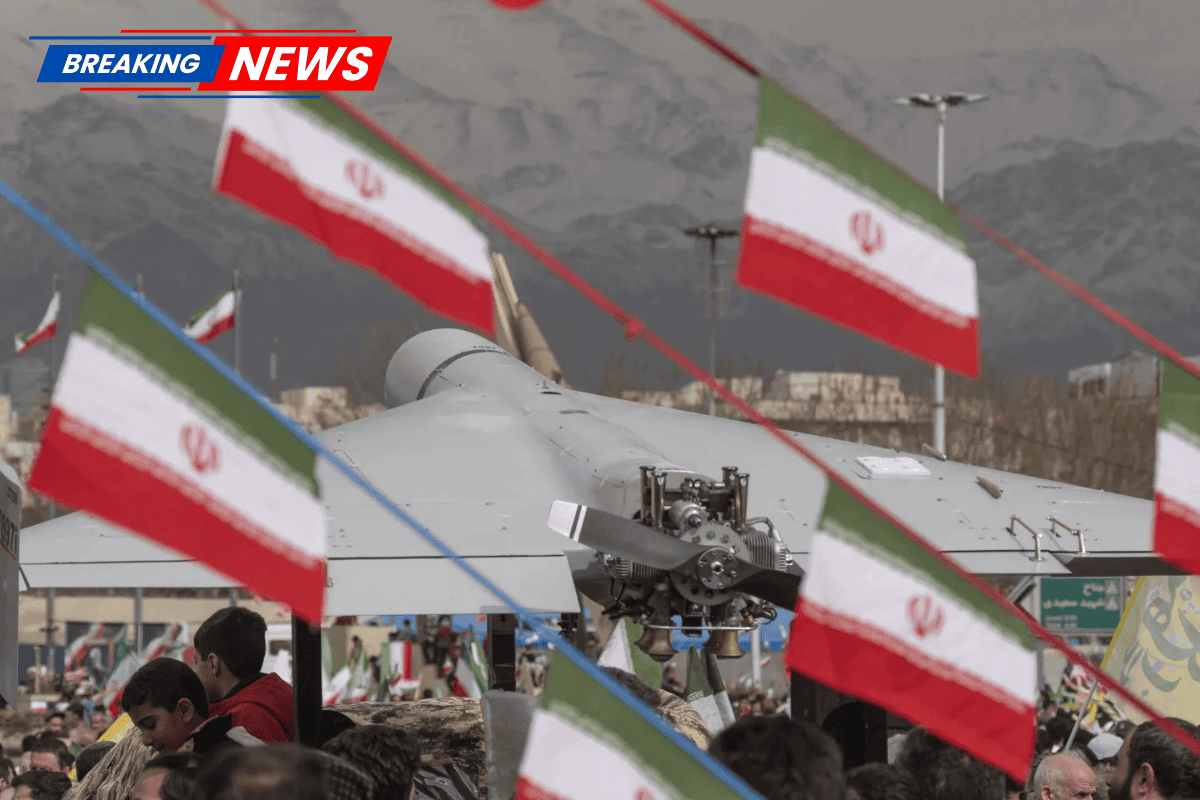
The ongoing U.S. and Israeli military campaign against Iran has made significant strides, according to the Institute for the Study of War (ISW).
While the spike in oil prices due to the conflict has caused economic and political concern, particularly for President Donald Trump, the military operations are reportedly making progress in severely damaging Iran’s military capabilities, particularly its reliance on drone and missile attacks.
Reducing Iran’s Military Leverage
The Institute for the Study of War (ISW) reported on Sunday that while Iran’s military inflicted substantial damage on U.S. installations and allied infrastructure early in the war, the pace of its attacks has sharply declined.
This reduction in attacks is a direct result of the sustained bombardment by U.S. and Israeli forces, which have destroyed hundreds of Iranian launchers, undermining Iran’s ability to carry out sustained drone and missile assaults.
The report highlighted a stark drop in the frequency of drone attacks on the United Arab Emirates—from 332 on the second day of the war to just six on Sunday. Similarly, ballistic missile attacks fell from a peak of 137 on the first day of the conflict to just four in the latest reports.

The ISW described this as a “relatively positive” military trajectory for the U.S. and Israel, with Iranian forces reportedly demoralized, with many troops deserting and refusing orders.
Ongoing Threats and Risks
Despite these successes, some Iranian drones have still managed to penetrate U.S. air defenses, causing politically unacceptable damage to oil infrastructure. However, ISW emphasized that the overall trend in attacks remains overwhelmingly positive for the coalition forces.
The report also ruled out the possibility that Iran is holding back its weaponry in hopes of using it later, pointing out that such a tactic would be risky, given the diminishing number of launchers and the continuous targeting of leadership within the Islamic Revolutionary Guard Corps (IRGC).

The last reported Iranian attack on merchant shipping occurred on March 11, although it is unclear whether this was due to reduced traffic in the Strait of Hormuz or because of Iran’s waning military capabilities.
Economic and Political Pressure
Iran’s strategy is not to defeat the U.S. military directly but to cause political and economic strain. The soaring oil prices have already led to increased gasoline prices and are contributing to higher inflation, which could trigger public backlash in the lead-up to the U.S. midterm elections.
Iran’s objectives focus on disrupting shipping, activating proxies, committing terrorism, and engaging in cyberattacks, aiming to raise costs and create political pressure that would force the U.S. and its allies to end the conflict prematurely.
The ISW noted that Iran’s calculation is to provoke U.S. casualties, drive up oil prices, and impose economic costs on both the U.S. and its Gulf allies. In doing so, Iran hopes the U.S. and Israel will politically decide to end the war without achieving their objectives.
The Strait of Hormuz and Future Risks
The Strait of Hormuz, a vital waterway for global oil trade, remains one of the key focal points of the conflict. Despite the ongoing threats in the area, U.S. Navy officials have expressed confidence that they can reopen the Strait if necessary.
However, the risk tolerance of the global oil market will ultimately determine how long disruptions in the Strait will last.
President Trump has called on other nations to assist in securing the Strait, warning that NATO’s failure to help would have serious consequences for the future of the alliance. However, no country has yet agreed to send warships to assist with escorting tankers through the dangerous waters.
While Iran’s military capabilities have suffered significant blows, U.S. and Israeli forces are still facing the challenge of preventing Iran’s use of economic and political pressure to turn minor tactical successes into strategic wins.
The ongoing Operation Epic Fury is reportedly achieving its military objectives so far, but experts caution that the campaign is not yet complete. The reduction in missile and drone attacks presents a promising picture of the campaign’s success, but declaring the operation a failure at this stage would be premature.










‘Disgusting.’ Democratic senator condemns Donald Trump’s reaction to Mueller’s death